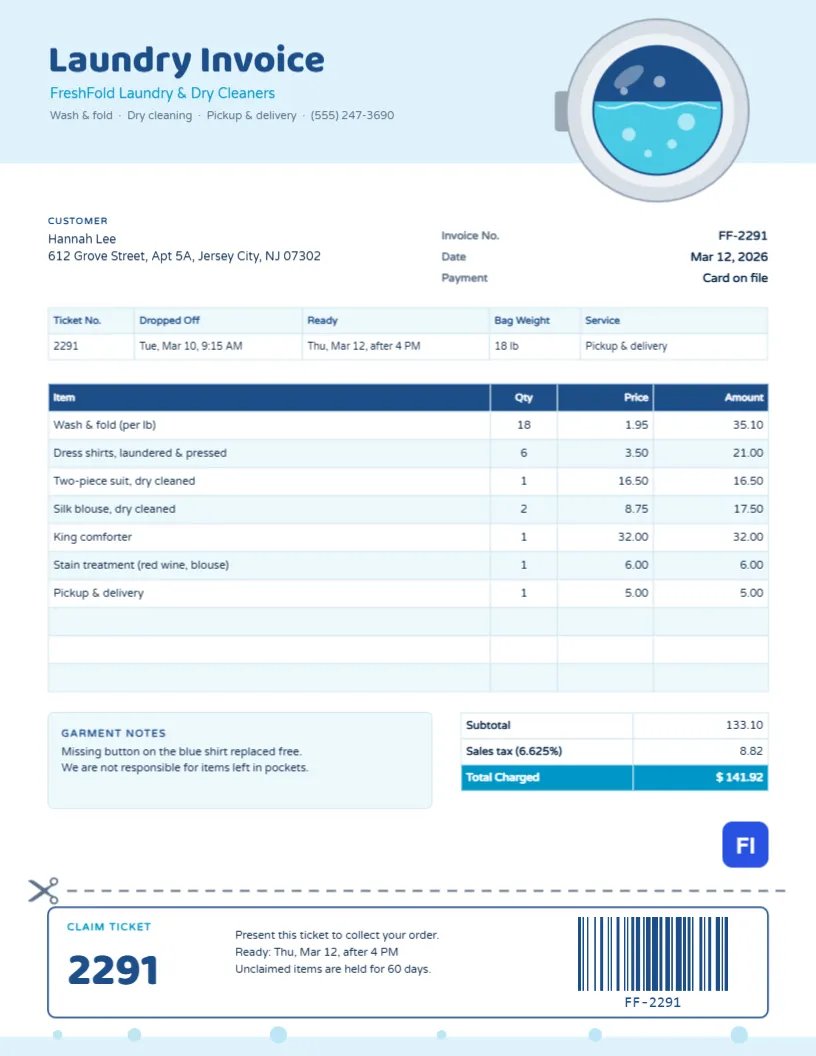
A laundry or dry cleaner handles hundreds of garments a day, and every order needs to come back to the right customer, complete, on time, and correctly charged. The paperwork that makes that possible is simple but important: a ticket number, the drop-off and ready times, the weight or piece count, any special treatment, and a claim ticket for collection. This Laundry and Dry Cleaning Invoice Template brings those pieces together, with a washing machine porthole full of suds breaking out of a pale blue header and a tear-off claim ticket at the bottom.
Laundromats, Dry Cleaners and Pickup Services
It suits dry cleaners, wash-and-fold laundromats, laundry pickup and delivery services, alteration and cleaning shops, and hotel or commercial laundry services. The sample shows FreshFold Laundry & Dry Cleaners billing a customer for eighteen pounds of wash and fold, six laundered and pressed shirts, a dry-cleaned suit, two silk blouses, a king comforter, a stain treatment, and pickup and delivery.
A Porthole Full of Suds
The top of the page is a soft sky-blue band. On the right, a round washing machine door breaks out below it: a brushed steel ring with a hinge, a pale inner rim, and a deep blue window in which light blue water sloshes, with white bubbles rising and a highlight on the glass. On the left, Laundry Invoice is set in bold Baloo 2 in deep blue, with the business name in bright blue and the services and phone number underneath.
The customer block and the invoice number, date, and payment method follow. A strip records the ticket number, drop-off time, ready time, bag weight, and service type. The items table, a garment notes box, and the totals come next. Then a dashed cut line with a small pair of scissors marks off the claim ticket: a rounded box with CLAIM TICKET, the ticket number in large type, collection instructions, and a barcode. A thin blue band with a few bubbles closes the page.
Per Pound or Per Piece?
Laundries and dry cleaners price differently, and customers are often unsure which they are paying. A simple explanation helps:
| Service | Usually Priced | Examples |
|---|---|---|
| Wash & fold | Per pound, often with a minimum | Everyday clothes, towels, sheets |
| Laundered shirts | Per piece | Cotton dress shirts, pressed on hangers |
| Dry cleaning | Per piece, by garment type | Suits, dresses, silk, wool coats |
| Bulky items | Per item, by size | Comforters, duvets, curtains |
| Special treatment | Per stain or per item | Wine, ink, grease, repairs |
The sample mixes all of these, which is typical for a household order.
Tickets, Weights and Ready Times
The ticket strip is what connects the bag on your rail to the customer at your counter. The ticket number, drop-off time, promised ready time, and bag weight should match the tag on the order. Writing the promised ready time on the invoice sets clear expectations and helps staff prioritize the day’s work.
The Tear-Off Claim Ticket
The claim ticket at the bottom of the page is the customer’s receipt for their clothes. Cut or tear along the dashed line and hand it over at drop-off, keeping the invoice with the order, or give the customer the whole page if you run a pickup service. The large number is easy to read across a counter, and the barcode can be scanned at collection. Click the barcode, and the QR/Barcode panel opens so you can type the new ticket number.
Charges and Tax
The items in the sample total $133.10. Sales tax at 6.625% adds $8.82, and the card on file is charged $141.92. Tax rules for laundry and dry cleaning vary widely, and some states exempt them entirely, so check what applies to your business.
Updating the Ticket Strip and Items
The ticket strip, items list, and totals are editor tables. Double-click them or use Edit Table Data, with + Add Row and – Remove Last to fit each order. The cells hold typed values, so work out each amount, the tax, and the total yourself. The claim ticket’s number and text are plain text boxes; update them to match the ticket strip.
Garment Notes and Liability
Dry cleaners are sometimes blamed for damage that was already there, or for items left in pockets. The garment notes box records what you noticed and fixed, such as a missing button replaced for free, and reminds customers that you are not responsible for items left in pockets. Note pre-existing stains, tears, or loose trim at drop-off too.
Recoloring the Machine and Bubbles
The porthole is grouped with its water and bubbles, so it moves and resizes as one. The blues can be changed to teal or lavender to match your shop, and the steel ring can become white for a modern front-loader look. The small scissors by the cut line are an editable vector.
Print It at the Counter
This invoice is laid out for letter-size paper. Print it at drop-off, tear off the claim ticket for the customer, and email a copy for card-on-file customers. The light blue header and bubbles print softly on any printer, keeping ink use modest for high-volume counters.
Commercial and Hotel Laundry Accounts
Restaurants, salons, gyms, and small hotels send laundry every week and prefer a monthly statement. For these accounts, list each pickup date as a row with the weight or item count, apply the agreed account rate, and invoice at the end of the month. The ticket strip can hold the account number and pickup schedule instead of a single drop-off time.
Loyalty and Prepaid Laundry Plans
Regular customers are the backbone of a laundry business. Many shops offer a prepaid bundle, such as a set number of pounds of wash and fold each month, or a loyalty discount after a certain number of visits. Show the plan and the balance remaining in the garment notes box, so customers can see how much of their plan they have used.
Laundry Invoice FAQs
Can I use this for a pickup and delivery service?
Yes. The sample already includes a delivery line; add your delivery window in the ticket strip.
What if a customer loses the claim ticket?
Look up the order by the ticket number or name on your copy of the invoice and ask for ID.
How long should unclaimed items be kept?
Set a policy, such as the 60 days in the sample, and check any local rules on abandoned property.