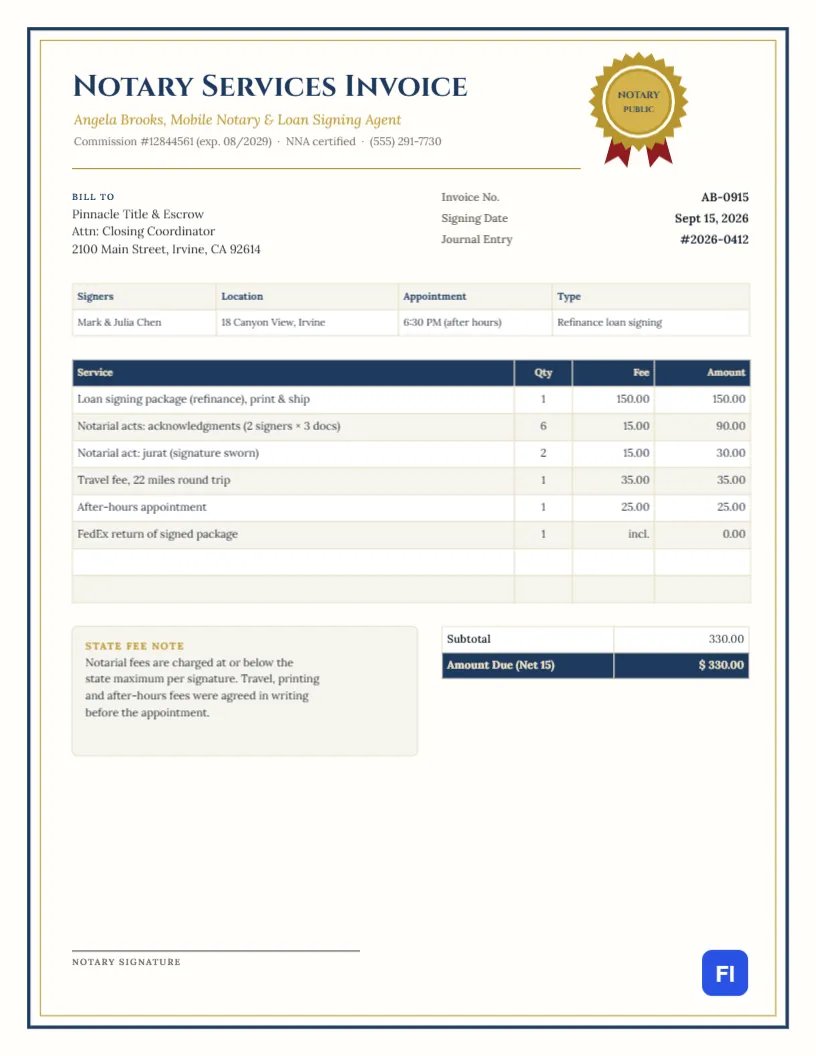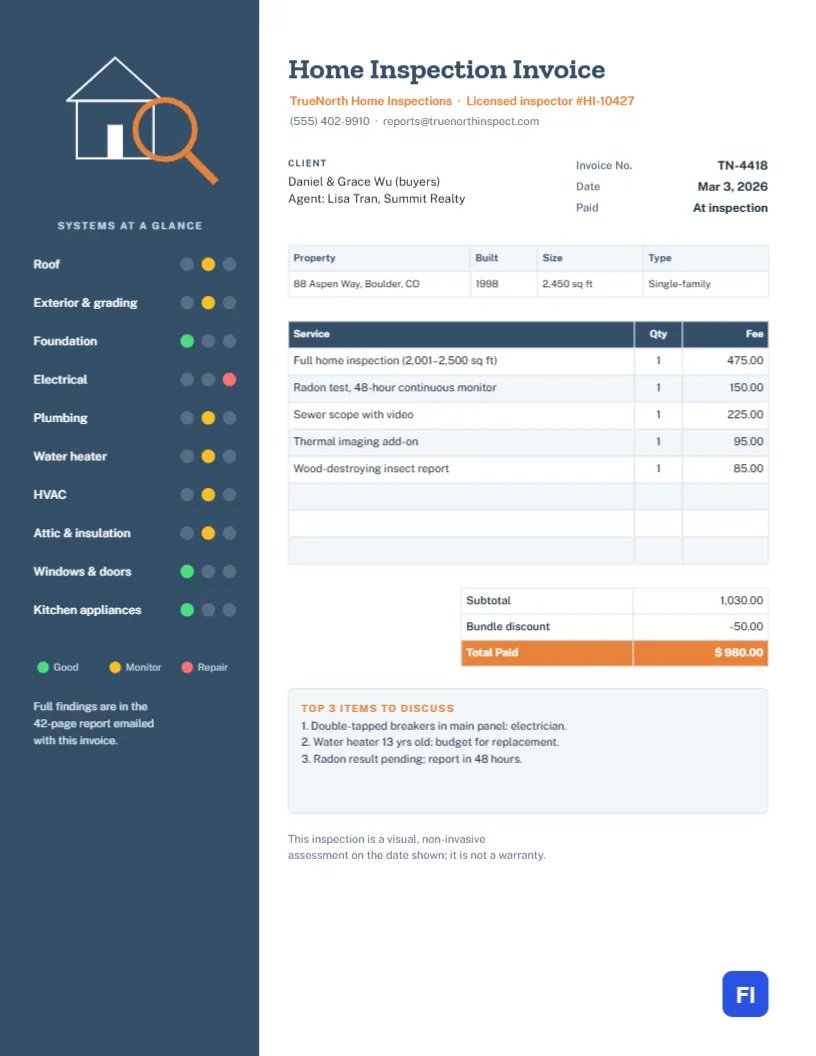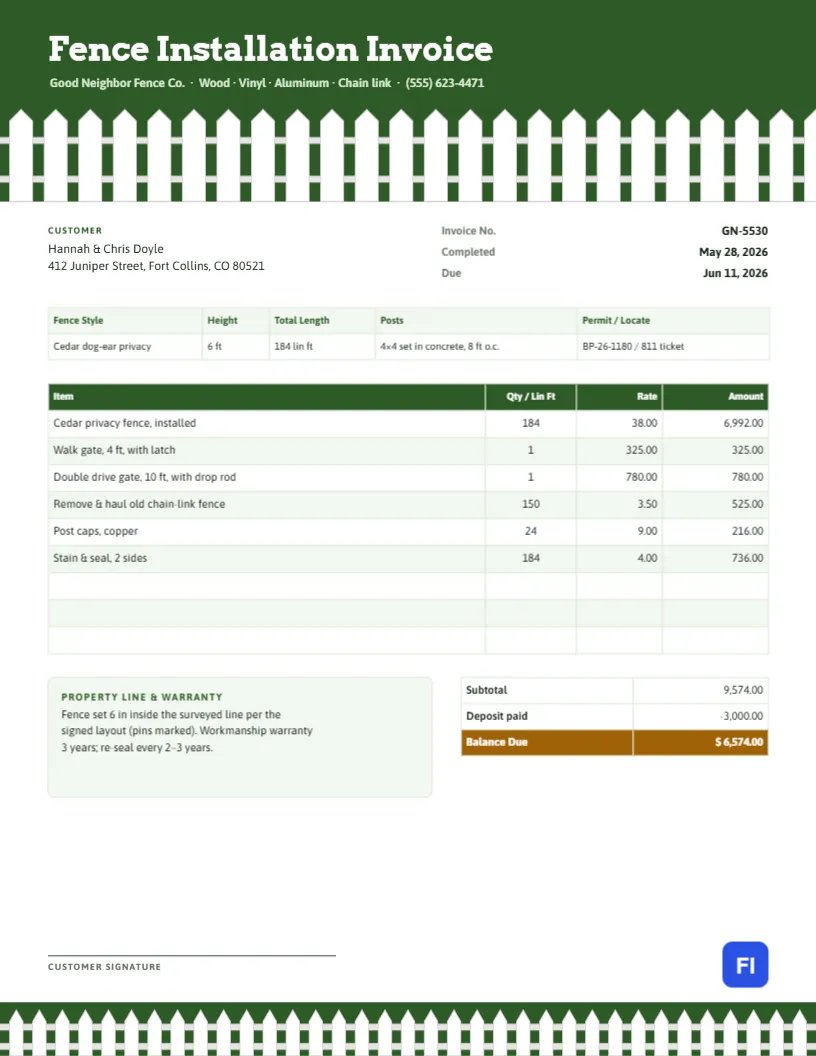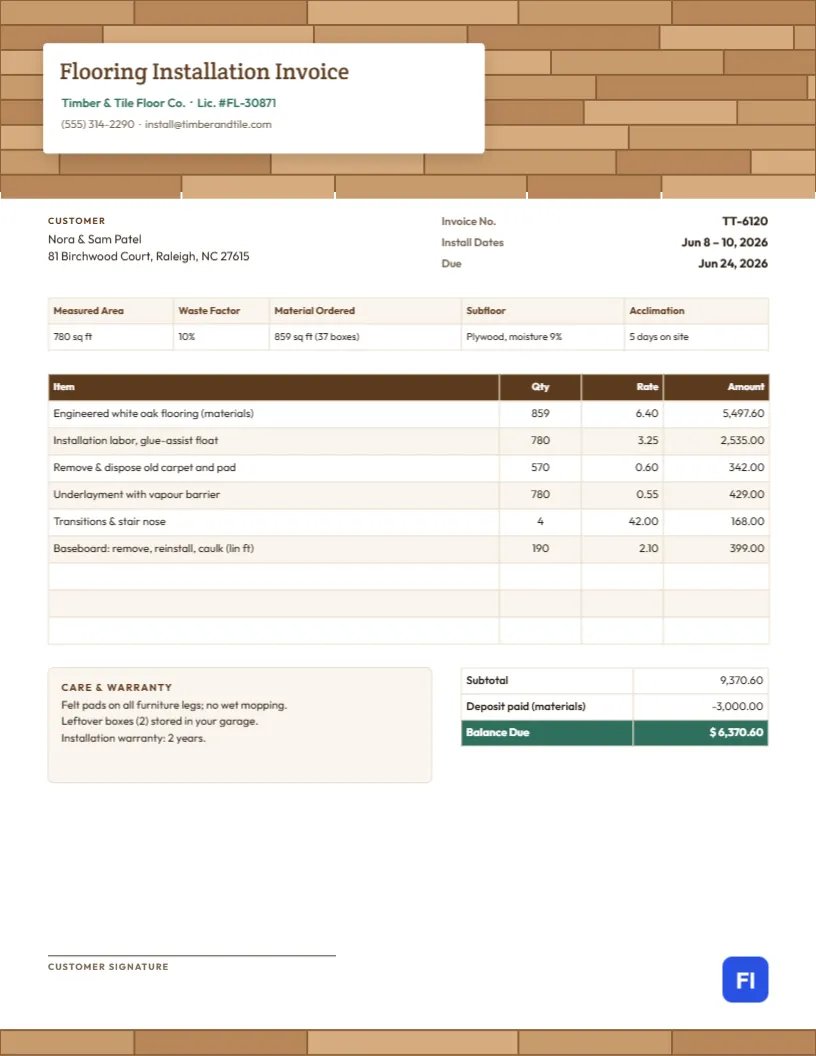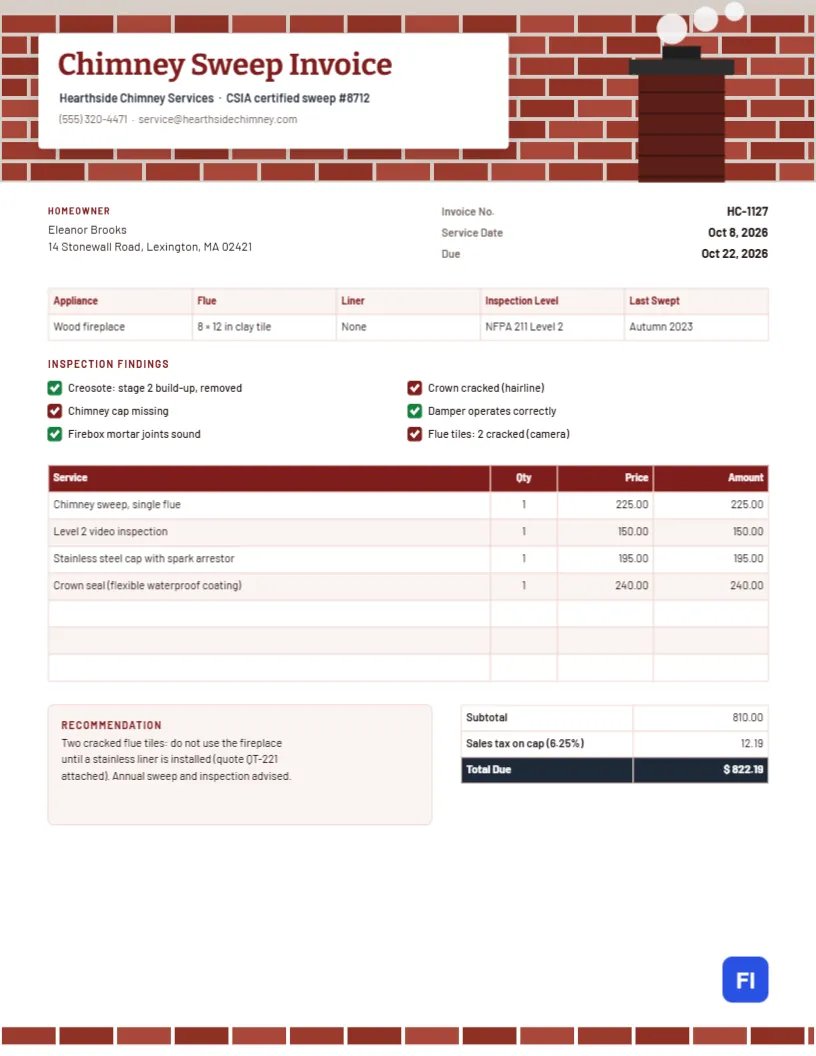
A chimney sweep’s visit is part cleaning, part safety inspection. Homeowners need to know not only that the flue was swept but what the sweep found: creosote build-up, a cracked crown, a missing cap, damaged flue tiles. Those findings decide whether the fireplace is safe to use. This Chimney Sweep Invoice Template records them clearly, beneath a header built from red bricks with a chimney stack rising on the right and smoke puffing from the top.
Chimney Sweeps, Masons and Hearth Specialists
It suits chimney sweeps, chimney repair and masonry contractors, stove and fireplace installers, and home inspectors who offer chimney inspections. The sample shows Hearthside Chimney Services invoicing a homeowner for a sweep, a video inspection, a stainless cap with spark arrestor and a flexible crown seal, and recommending a new flue liner.
Bricks, a Stack and Smoke
The whole header is laid in running-bond brick: rows of red bricks in three slightly different shades, offset by half a brick like a real wall, with pale mortar between them. A white card with a soft shadow sits on the bricks and carries Chimney Sweep Invoice in burgundy Bitter, the company name and certification number, and the contact line. On the right, a darker brick chimney stack rises with a grey crown and flue, and three white puffs of smoke drift upward. A single row of bricks forms the footer.
The homeowner block and invoice facts follow. A strip records the appliance, flue size and material, liner, inspection level, and when the chimney was last swept. Six ticked findings, in green for good and burgundy for problems, are followed by the service table, a recommendation box, and the totals.
Chimney Inspection Levels Explained
The US fire safety standard for chimneys, NFPA 211, describes three levels of inspection. Recording the level on the invoice tells the homeowner how thorough the check was:
| Level | When it is used | What it includes |
|---|---|---|
| Level 1 | Annual check of a chimney in regular use with no changes | Readily accessible parts of the chimney, flue, and connections |
| Level 2 | Property sale, a chimney fire, a new appliance, or a change of fuel | Level 1 plus a video scan of the flue and accessible attics and crawl spaces |
| Level 3 | Serious hidden damage is suspected | May require removing parts of the building or chimney |
Reading the Findings
The sample’s findings show why a Level 2 inspection matters: stage 2 creosote was removed, the damper works, and the firebox mortar is sound, but the crown has a hairline crack, the cap is missing, and the camera found two cracked flue tiles. Each finding has a tick box in green or burgundy so the homeowner sees at a glance what is fine and what needs attention.
The Charges
A single-flue sweep ($225), the Level 2 video inspection ($150), a stainless steel cap with spark arrestor ($195), and a crown seal ($240) come to $810.00. Sales tax at 6.25% is charged on the cap only, $12.19, for a total of $822.19. The liner is quoted separately because it is a larger job.
Safety Recommendations in Writing
When a chimney is not safe to use, say so plainly and in writing. The sample’s recommendation box tells the homeowner not to use the fireplace until a stainless liner is installed and refers to the attached quote. A written warning protects the family and protects you if they ignore the advice.
Editing the Findings and Services
Each finding is a tick box with a text label; change the wording to match what you found, and switch a box between green and burgundy to show good or needs repair. The details strip, service table, and totals are editor tables: double-click them or use Edit Table Data, with + Add Row and – Remove Last to change the number of lines. Totals are typed values, so add them up yourself.
Wood Stoves, Gas Fireplaces and Inserts
The template works for any appliance. For a wood stove, record the connector pipe and clearances; for a gas fireplace, the venting type and any carbon monoxide test; for an insert, whether it has a full-length liner. Change the appliance and flue details in the strip and the findings to match.
Recolouring the Brick Header
The bricks are grouped, so the whole wall recolours together; buff or grey bricks suit different regions. The chimney stack and smoke are a separate group that can be moved or removed. The burgundy title and table headers can change to your brand colour.
Printing or Sending the Report
The invoice fits a standard letter page. Many sweeps email the invoice with inspection photos and video stills, which homeowners and insurers value. Print a copy for customers who prefer paper, especially older homeowners.
When Should a Chimney Be Swept?
The general guidance is an annual inspection, with sweeping when creosote build-up reaches about an eighth of an inch or more. Heavy users of wood stoves may need sweeping more than once a season. Add the recommended next visit to the recommendation box so customers can plan.
Chimney Fires and Insurance Claims
After a chimney fire, homeowners often need a Level 2 inspection report for their insurer. List the damage found, the repairs needed, and your recommendation clearly; attach photos and send the invoice directly to the homeowner, who forwards it to their insurance company.
Creosote Stages in Plain Language
Sweeps describe creosote in three stages. Stage 1 is a light, sooty dust that brushes off easily. Stage 2 is flaky, shiny, and crunchy, and needs stronger rotary tools. Stage 3 is a hard, glazed tar that is very flammable and may need chemical treatment over several visits. Naming the stage in the findings, as the sample does, tells the homeowner how urgent the problem was and why burning habits, such as using dry, seasoned wood, matter.
Chimney Sweep Invoice FAQs
Should I charge for a second flue?
Yes. Add each additional flue as its own sweep line, usually at a reduced rate.
Can I use this for a home sale inspection?
Yes. Set the level to Level 2 and bill the buyer or seller who ordered it.
What if the chimney is too dirty to inspect?
Sweep first, then inspect, and note that in the findings.