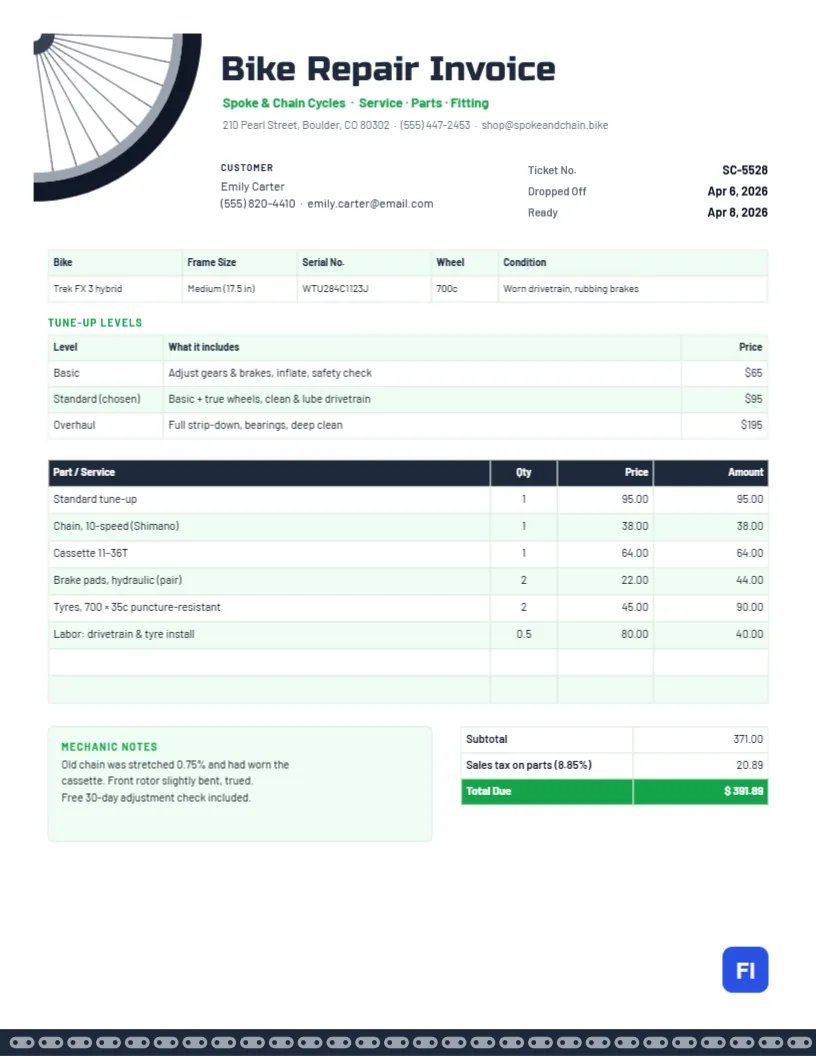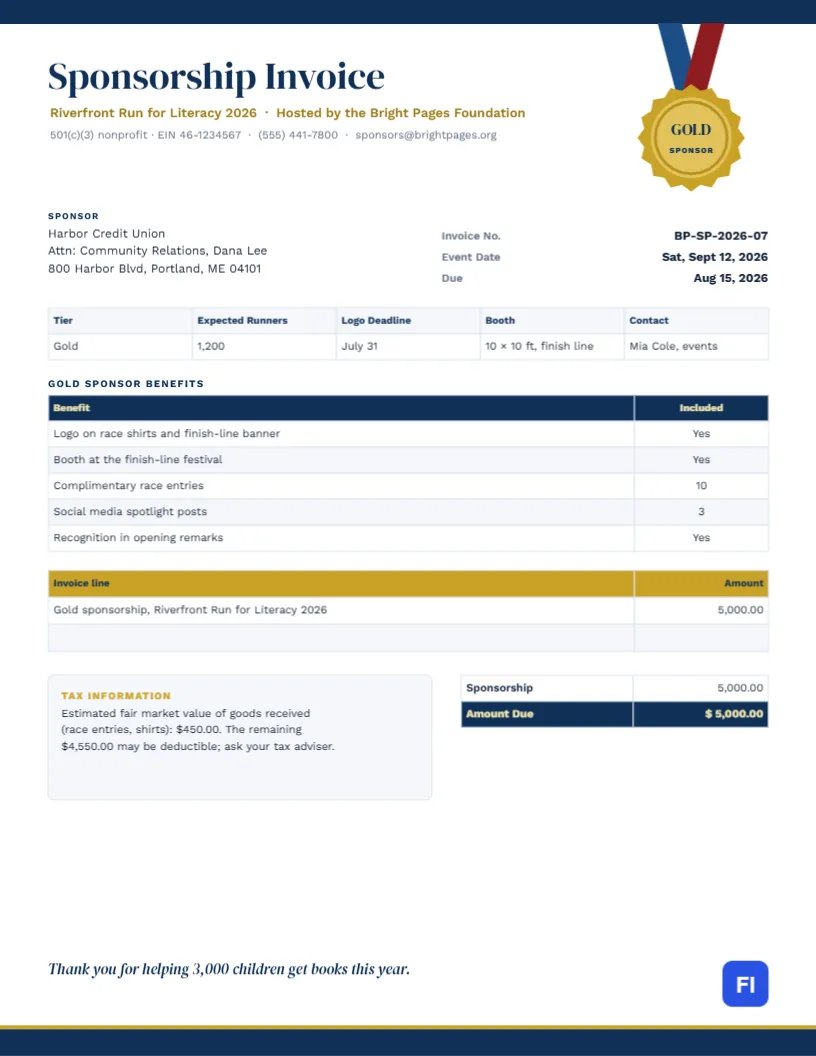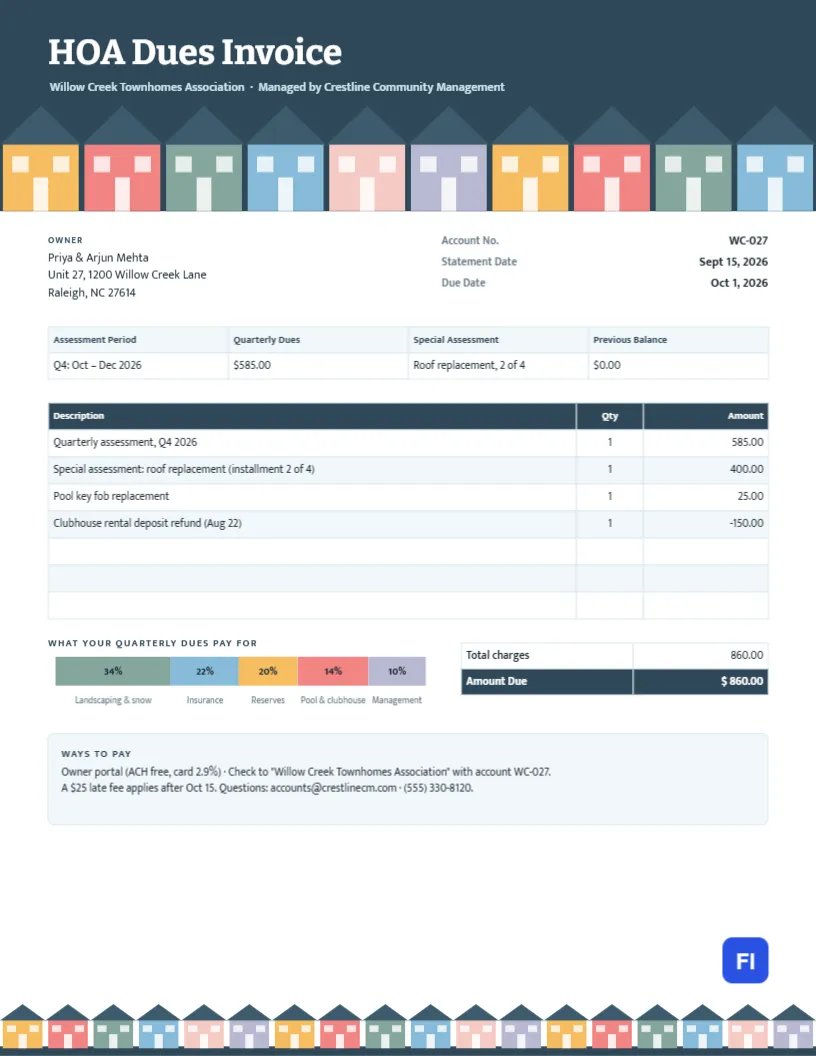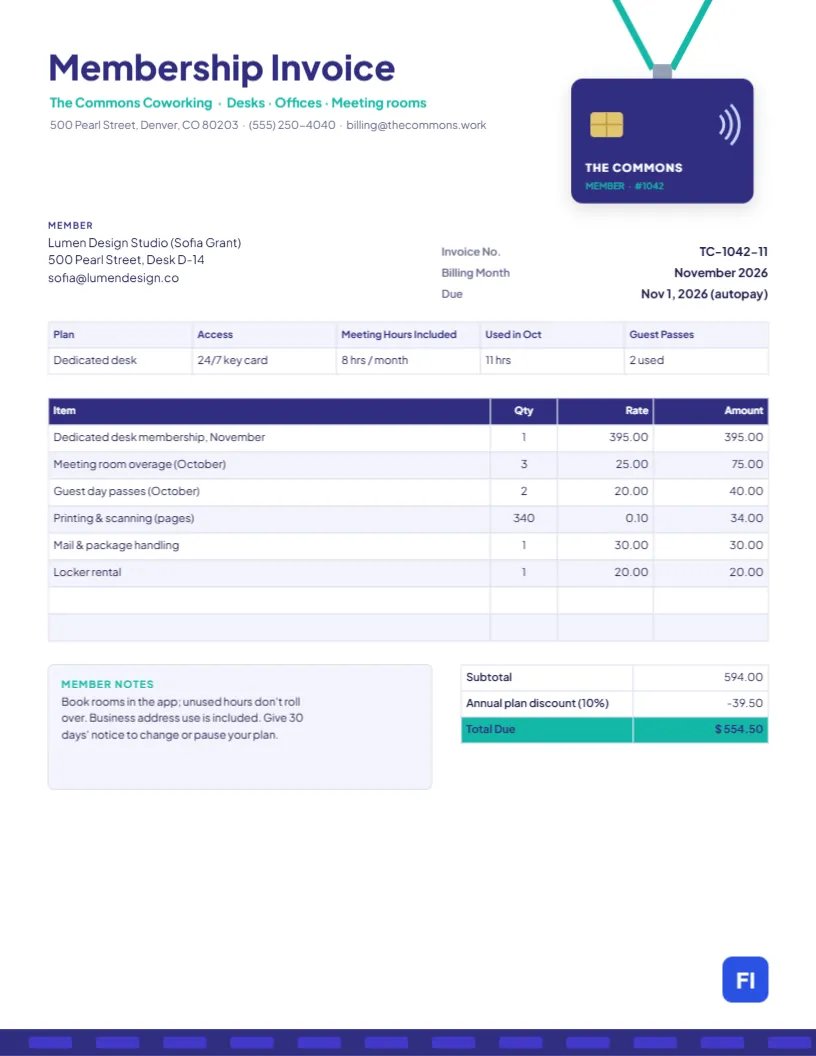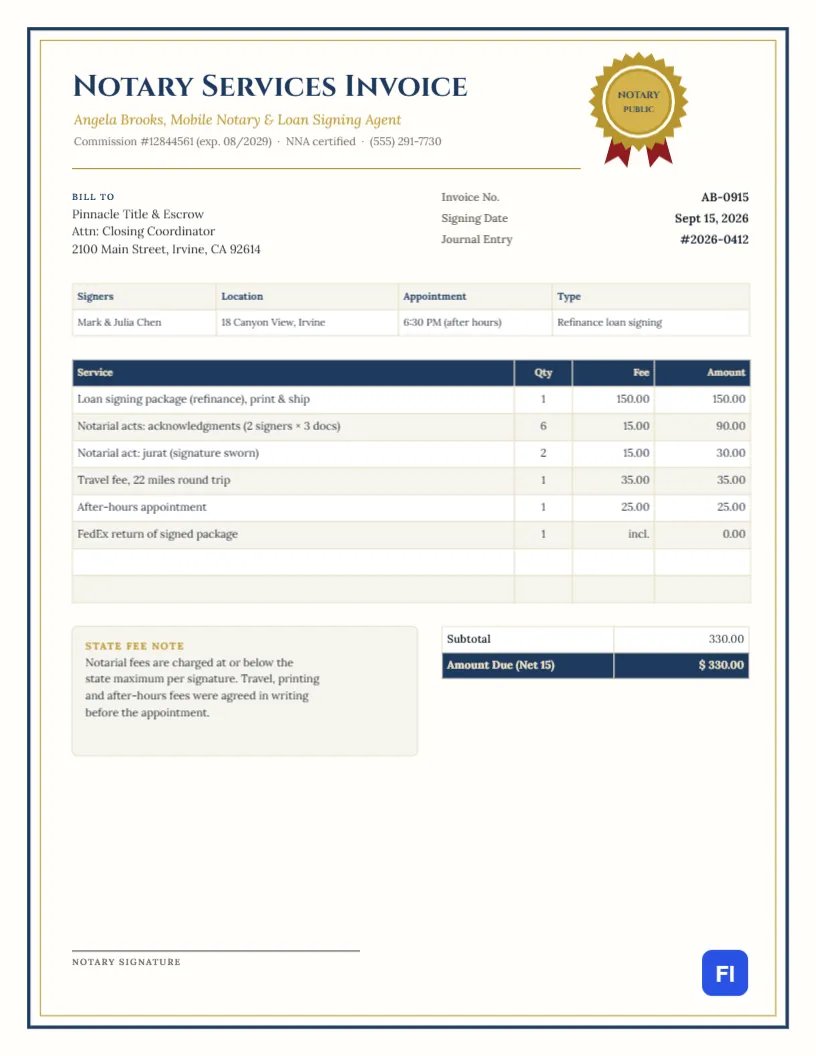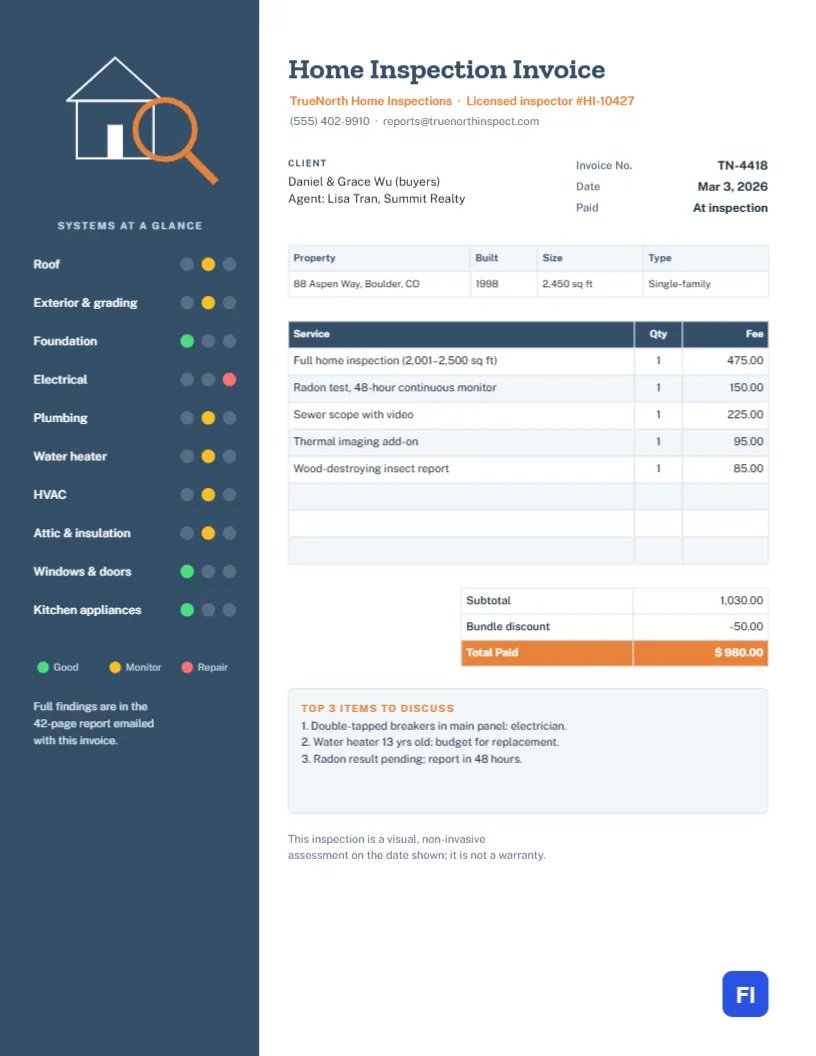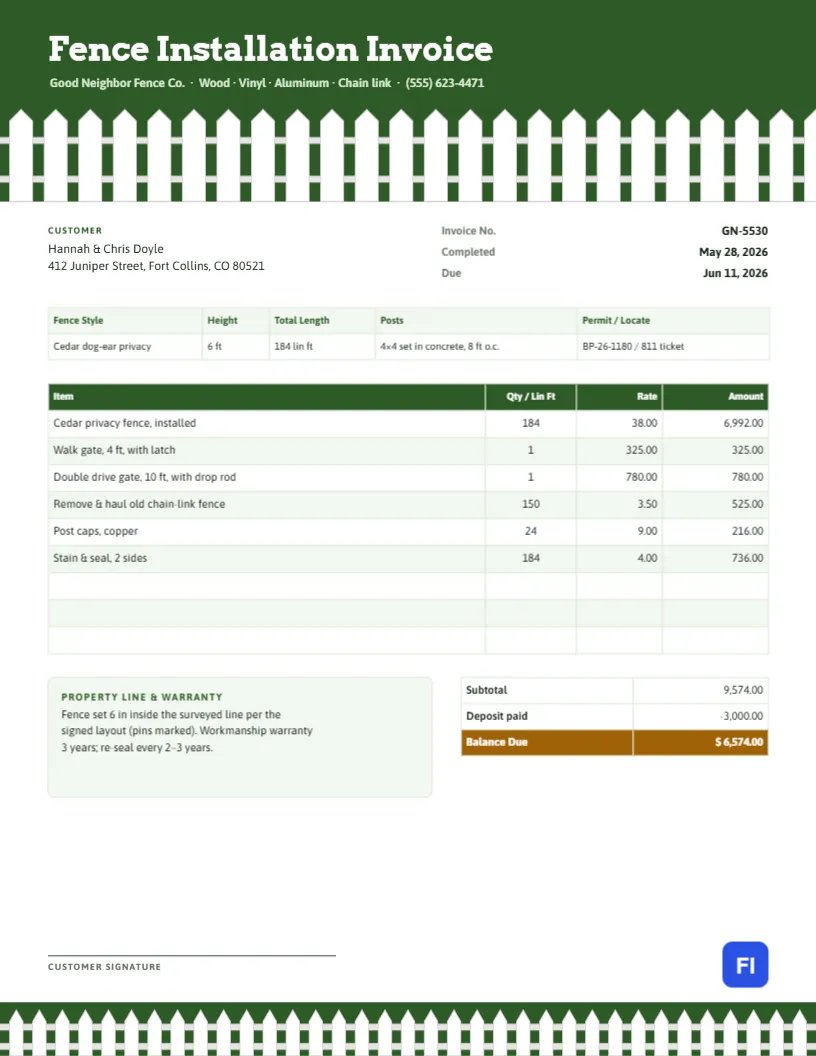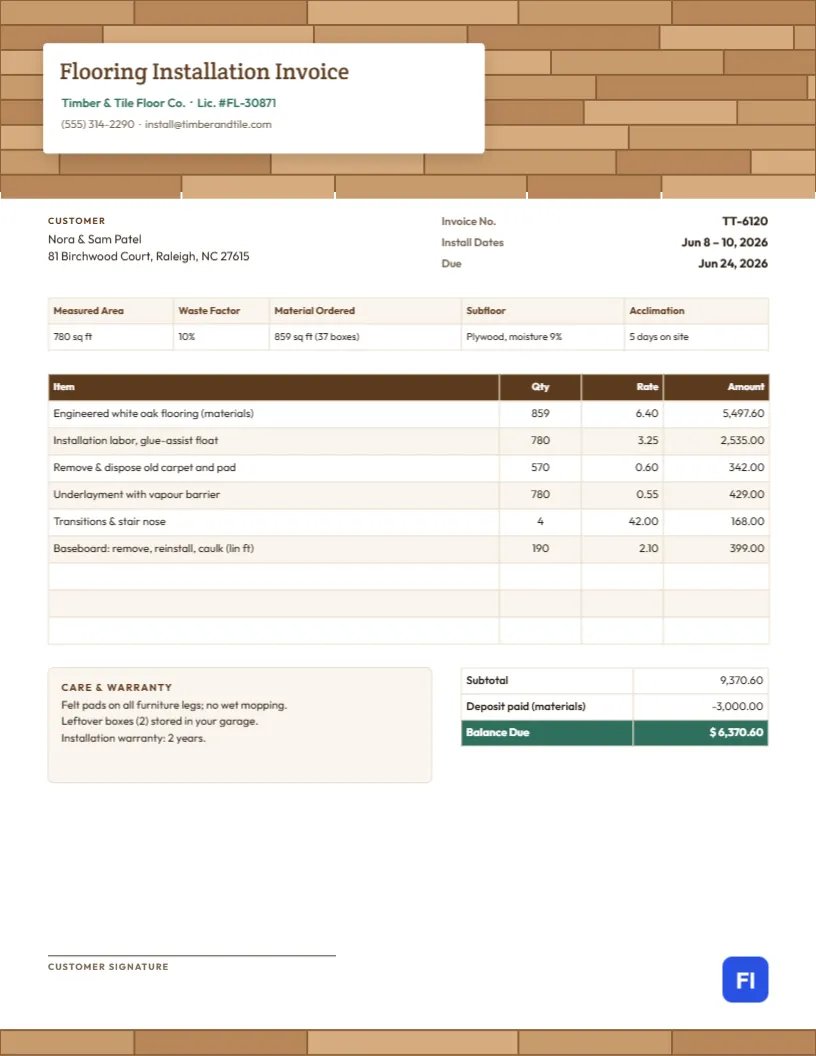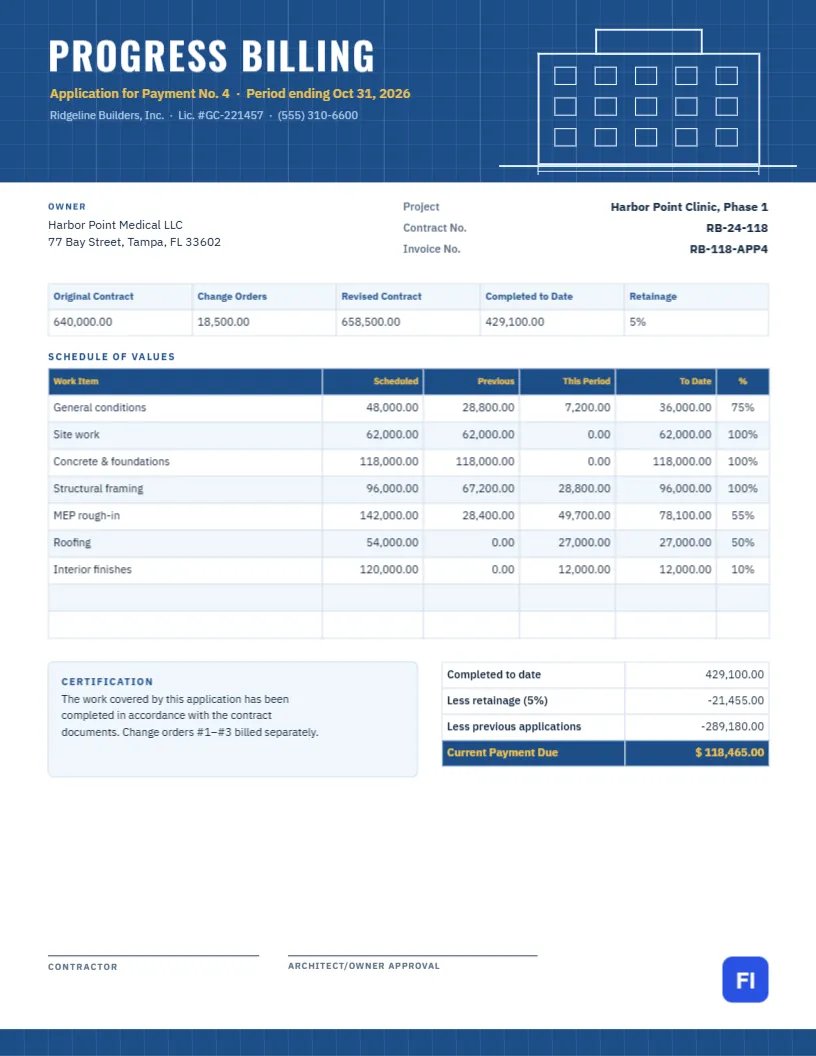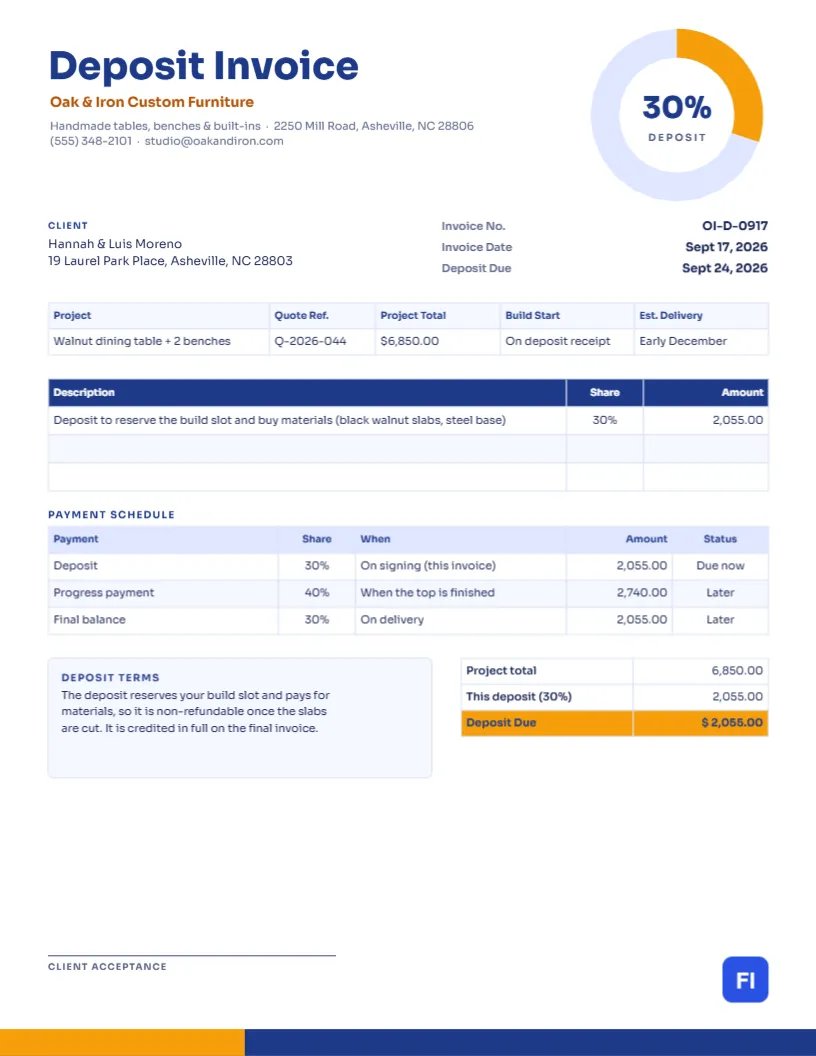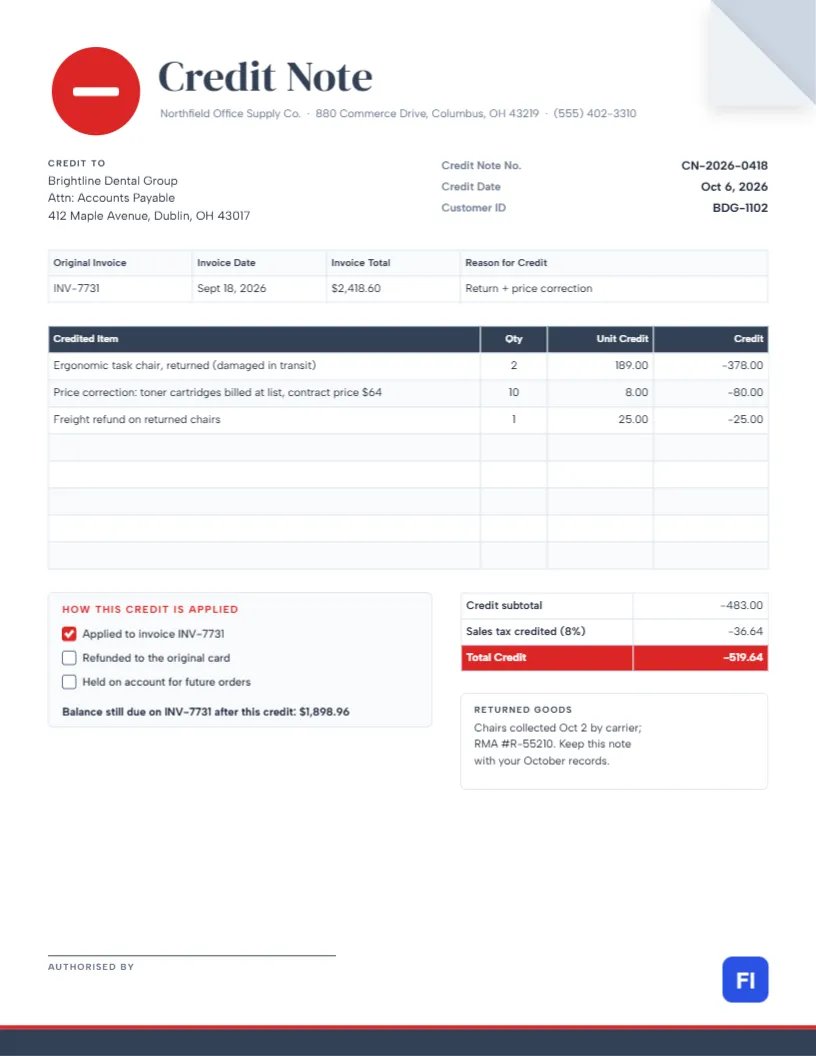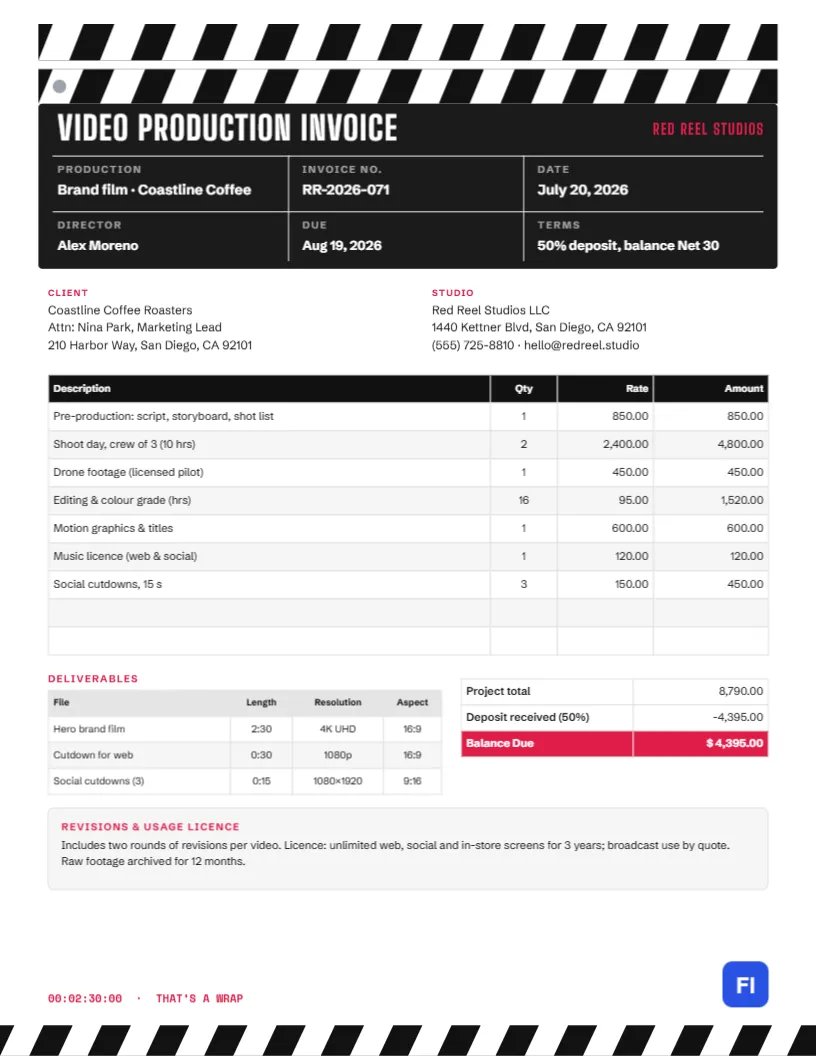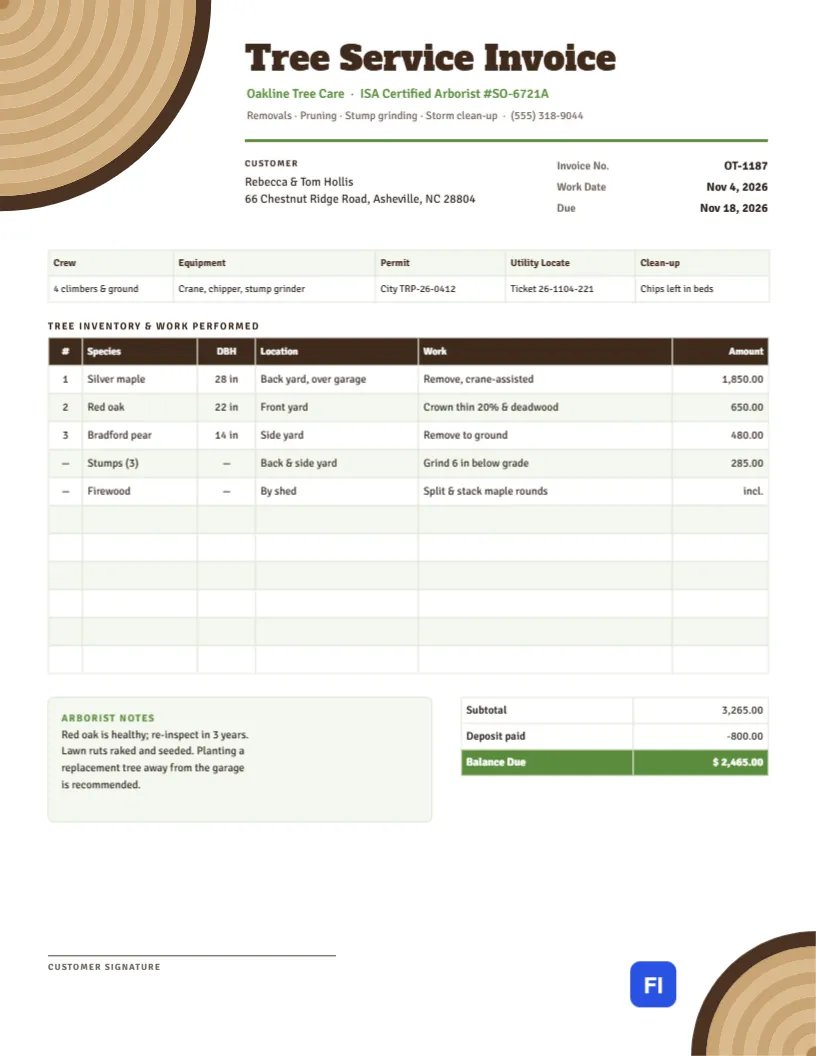
Tree work is priced tree by tree. A 28-inch maple leaning over a garage is a very different job from a small pear in an open side yard, even though both are tree removal. Homeowners want to see which trees were worked on, what was done to each, and why it cost what it did. This tree service invoice template answers that with a tree inventory table, and it announces the trade with a cross-section of a tree trunk, growth rings, and bark, tucked into the top-left corner.
Arborists, Tree Care Companies and Stump Grinders
It suits tree care companies, ISA-certified arborists, tree removal crews, stump grinding services, utility line clearance contractors, and landscapers who take on tree work. The sample shows Oak Line Tree Care billing a homeowner in Asheville for a crane-assisted removal of a silver maple over the garage, a crown thin of a red oak, the removal of a Bradford pear, grinding three stumps, and splitting and stacking the maple for firewood.
Growth Rings in the Corners
In the top-left corner sits a quarter of a tree trunk seen in cross-section: a dark brown ring of bark around alternating bands of light and golden wood, like the rings of a freshly cut log, with the darker heartwood at the center. A smaller quarter-section of the same trunk sits in the bottom-right corner, so the rings bracket the page. Tree Service Invoice is set in chunky brown Alfa Slab One to the right of the top rings, with the company name and arborvitae certification number in leaf green, the services and phone number beneath, and a green rule underneath.
The customer block and the invoice number, work date, and due date sit under the rule. A strip records the crew, equipment, permit, utility locate ticket, and clean-up arrangement. The tree inventory follows, then an Arborvitae notes box beside the totals, and a signature line.
What Drives the Price of Tree Work
Customers are often surprised that two removals of similar-looking trees cost very different amounts. These are the main factors, and the inventory table records the first four:
| Factor | Why it matters |
|---|---|
| Size (height and DBH) | More wood to cut, lower and haul |
| Species | Hardwoods are heavier; some species are brittle or hazardous |
| Location and targets | Houses, garages, fences, and power lines mean careful rigging |
| Work type | Removal, pruning, cabling or storm clean-up |
| Access and equipment | Cranes and bucket trucks cost more but can be safer and faster |
| Debris handling | Hauling, chipping on site, or leaving firewood |
Reading the Tree Inventory
Each tree gets a number, its species, its DBH (diameter at breast height, measured 4.5 feet above the ground), its location, and the work performed. Numbering trees on the invoice, and ideally on your estimate sketch, removes any doubt about which tree was meant. Extra work such as stump grinding and firewood appears as its own rows with a dash instead of a number, as the sample shows.
Maple, Oak and Pear: What Each Tree Cost
The maple removal is $1,850, the oak pruning $650, the pear removal $480, and the stump grinding $285, while splitting the firewood is included. The subtotal of $3,265.00 less an $800 deposit leaves $2,465.00 to pay. Tree services are generally not subject to sales tax, but check the rules in your state.
Updating the Inventory and Strip
The crew strip, tree inventory, and totals are editor tables. Double-click to type into them or open Edit Table Data, then use + Add Row for more trees and – Remove Last to trim the list. The amounts are typed text, so total them and update the balance yourself.
Permits, Utilities and Safety
Many towns require a permit to remove large trees, and digging for stump grinding requires a utility locate. Recording both numbers on the invoice shows the homeowner that the job was done by the book and protects you if a question comes up later. Work near power lines should always be done by qualified line-clearance arborists or coordinated with the utility.
Arborvitae Notes That Add Value
The notes box is where an arborist’s expertise shows: the health of the trees you pruned, when to re-inspect, and advice about planting. In the sample, the red oak is healthy and should be re-inspected in three years, lawn ruts were raked and seeded, and a replacement tree away from the garage is recommended. Advice like this often leads to next year’s work.
Recoloring the Rings
Each set of rings is a group of shapes, so it can be moved, resized, or recolored in one step. Paler rings suggest pine, darker ones walnut or cherry. The leaf green used for the company name, rule, and totals can change to your brand color, while the wood tones are best left natural.
Printing for the Homeowner
The template is laid out on 8.5 x 11 inch paper. Email the PDF with before-and-after photos of the trees, and bring a printed copy for the customer to sign when you walk the finished site together.
Storm Damage and Insurance
After a storm, homeowners may claim tree removal from their insurance, usually when a tree has fallen on a structure. Insurers ask for an itemized invoice and photos showing the damage. Note the storm date in the arborvitae notes and describe the damage in the work column, such as “Remove maple from garage roof”.
Deposits and Scheduling Big Removals
Crane-assisted removals need the crane, crew, and permits lined up on the same day, and cancellations are expensive. Many tree companies take a deposit when the customer accepts the estimate, as the sample shows with its 00 credit. Put the scheduled date and the weather policy in your estimate, and show the deposit as a credit on the final invoice so the customer sees it was counted.
Tree Service Invoice FAQs
What does DBH mean?
Diameter at breast height: the trunk’s diameter measured 4.5 feet above the ground.
Can I show crane rental separately?
Yes. Add it as its own row, or include it in the removal price as the sample does.
How do I bill emergency storm work?
Add an emergency call-out line and bill labor and equipment by the hour if the job is unpredictable.